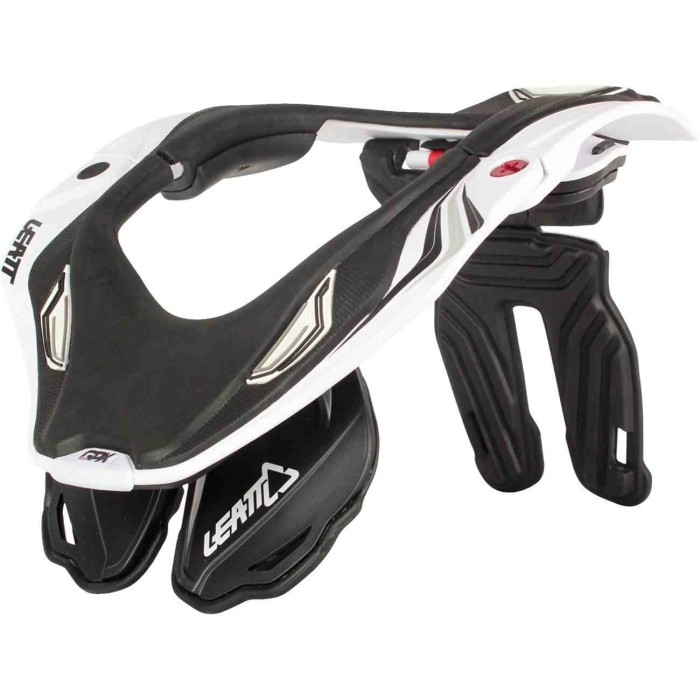
Leatt recently released their new neck brace called the GPX 5.5. Today, neck braces can be found in most everyone’s gear bag. However, some opt out of wearing neck braces due to factors related to comfort and fitment. Leatt has aimed to create a neck brace that comfortably fits a wider range of shapes and sizes, is easier to take care of, and outlasts its competition. Is it really as good as they claim? We’ve put it through the ringer to find out.
Durability & Maintenance
The new Leatt 5.5 has a new, slim design. Leatt switched from foam and fabric padding to hard injected, non-removable padding that can withstand a lifetime of abuse. This is a plus because the padding on the previous models wore out fast. The velcro never stuck and if you wanted it clean the padding you had to put it in the washing machine, which speeds up the wear process. To clean the GPX 5.5, all you need is a damp rag.
The Feel

The feel of the Leatt GPX 5.5 is unbelievable. Leatt made the new neck brace slimmer and lighter, yet maintained their promise to safety. They come stock with removable pads on the shoulders and chest rest to aid in comfort. It’s up to each individual rider if they would like to run them or not. If you are used to the older Leatts, you may opt for the padding. If you’re coming from a different neck brace, like the Alpinestar Bionic Neck Brace, removing the pads might fit your preferences more closely. Anyone familiar with wearing a neck brace would most likely not be able to notice that you’re wearing the Leatt GPX 5.5.
Since Leatt was aiming to make a neck brace that more people would want to wear, they’ve increased the range of motion. Looking around isn’t as strenuous as it used to be. The added maneuverability has also made it easier to find helmets that will work in harmony with the Leatt.
Performance
We didn’t test to see if the Leatt GPX 5.5 would keep us from breaking our neck, but we believe Leatt is the industry leader in neck brace development. We don’t know the engineering and technology that goes into making Leatt neck braces, but you can visit www.Leatt.com for more information.
Why is this Brace so much better? 

First off, the Leatt 5.5 has easy adjustability. No more allen bolts, no more chips, and no more spacers. All you do is unclip the adjustable “levers” on the front and back, and it slides back and forth. The spinal piece folds in to help with space in your gear bag. Also, the spinal rest is separated into to two strips, which flex during crashes to help reduce pressure on the spine. The new neck brace also has strategically placed weak points that are designed to bend and break if there is ever excessive load. If you break your neck brace while riding, it probably did its intended job . Would you rather buy another $369 neck brace or spend a few thousand in medical bills? This is almost a completely different neck brace than the older versions. If you’ve tried a neck brace before and decided it wasn’t for you, give the Leatt GPX 5.5 a try. It is more adjustable and more accommodating than any of its competitors. Leatt has produced one of, if not the best neck braces out on the market today with the GPX 5.5.
MSRP: $369
Sizes: (Adult: S/M, M/L) and (Junior, one size fits all).
Colors: Black/Grey, White/Black, Orange/White/Black, Red/Black.
Sizes: (Adult: S/M, M/L) and (Junior, one size fits all).
Colors: Black/Grey, White/Black, Orange/White/Black, Red/Black.
Pros:
- Slimmer feel, lower profile
- Easy adjustability
- Two piece spinal plate for comfort and safety
- Hard injected non removable foam is more durable
- Button-style clip instead of latch makes easier to take on and off
- Several different color-ways
Cons:
- No pads means no more switching colors.
- Button clip will have to be taken apart and cleaned/grease to work properly after mud races